
How to choose an antistatic rubber shaft for electronics in 2026?
2026-09-15
- Physics of the process: why the usual “antistatic agent” does not work in electronics
- Key technical parameters for specification in 2026
- Typical integration mistakes and case study
- Criteria for assessing supplier reliability (E-A-T-U factors)
- Logistics and economics of ownership in 2026
- Checklist for an engineer before ordering
The main thing in 30 seconds
- Selection criterion:In 2026, the key parameter becomes not just surface resistance (10⁶–10⁹ Ohm), but the stability of antistatic properties at temperatures above 80°C and dynamic loads.
- Technological shift:Switching from migration additives to permanent conductive fillers (carbon nanotubes) reduces the risk of contamination of electronic components by 99.4%.
- Manufacturing standard:The shaft runout tolerance should not exceed 0.01 mm; the use of shafts with irregular geometry leads to microvibrations that generate a triboelectric charge even on grounded equipment.
Selecting an antistatic rubber shaft for your electronics assembly or printed circuit board manufacturing lines in 2026 requires looking beyond standard supplier tables. The industrial automation market is faced with stricter requirements for the cleanliness of the production environment: modern microprocessors and sensors are sensitive not only to dust particles, but also to electrostatic discharges (ESD), which can cause hidden defects in semiconductors.
Process engineers are increasingly faced with the problem of “aging” of the antistatic properties of rubber. Traditional solutions that work through the migration of hygroscopic additives to the surface lose effectiveness when air humidity drops below 30%, which is typical for the winter period in industrial workshops in Russia and the CIS. In this article, we will look at how to specify a rubber shaft that is guaranteed to dissipate static charge, will not contaminate the product, and will last the entire stated service interval.
Physics of the process: why the usual “antistatic agent” does not work in electronics
To select the correct component, it is necessary to understand the charge generation mechanism. When materials come into contact and separate (triboeffect), electrons are transferred. A rubber shaft interacting with a polymer film or printed circuit board becomes a source of potentially dangerous voltage if its volumetric electrical resistivity exceeds 10¹¹ Ohm cm.
In 2026, IPC (Association Connecting Electronics Industries) standards and internal regulations of large OEMs require the use of materials with resistance in the range10⁴ – 10⁹ Ohm. However, here lies the first trap for the buyer.
There are two types of antistatic rubbers:
- Migration type (Transient):They contain surfactants that “sweat” to the surface, attracting moisture from the air. Cheap, but unstable. At humidity <40% RH, their resistance can jump to 10¹² Ohms, turning the shaft into an insulator.
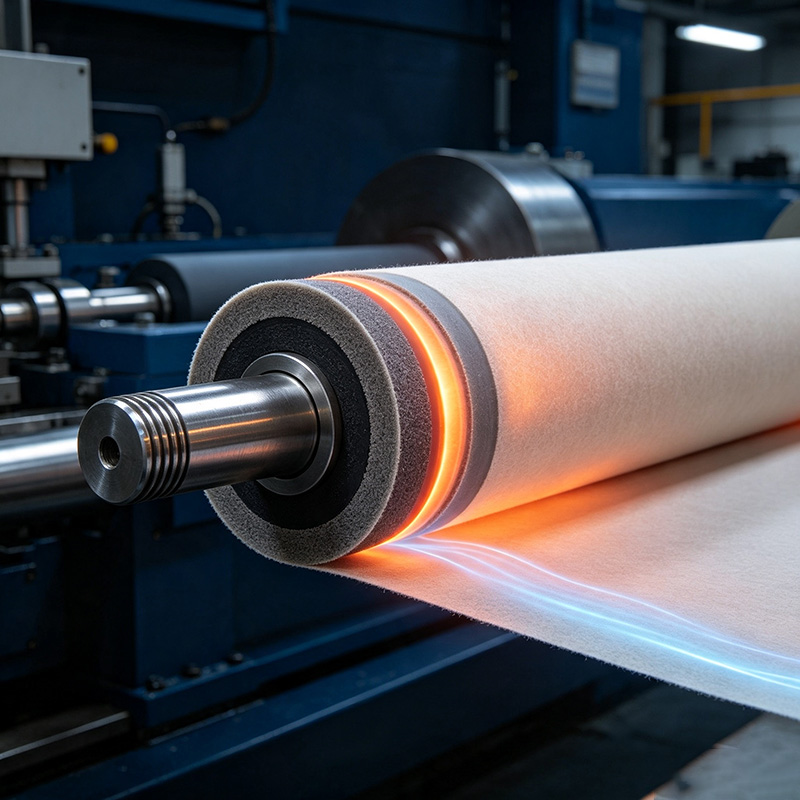
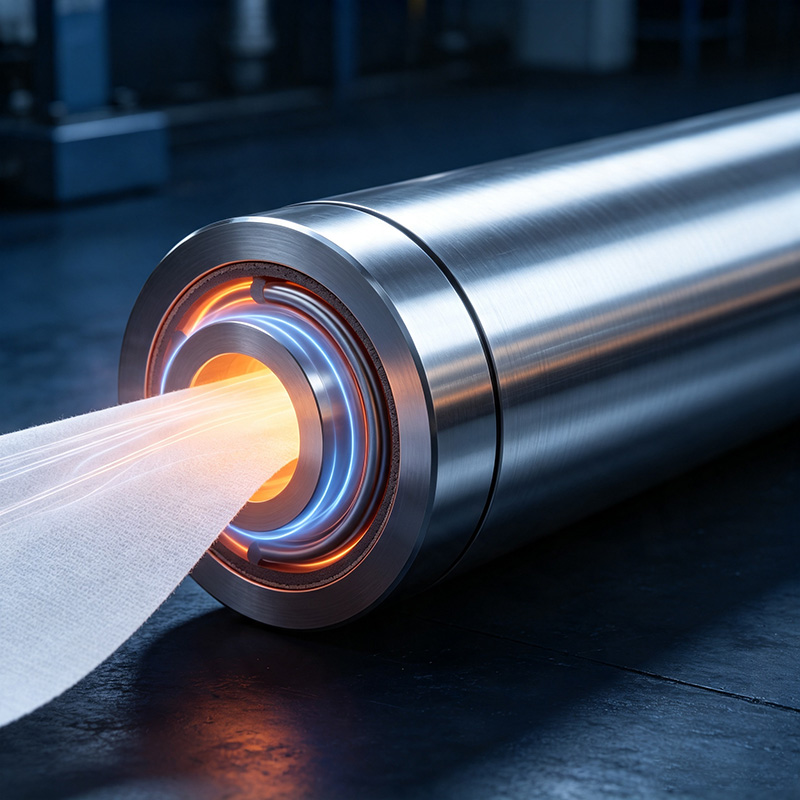
- Permanent:Carbon nanotubes, graphite or metal fibers are introduced into the rubber matrix. These materials create a permanent conductive network within the shaft volume. Their properties do not depend on humidity and temperature.
For high-precision electronics, only the second option is acceptable. The use of migration additives carries the risk of these substances settling on the contact groups of the boards, which leads to deterioration of soldering and corrosion. We are recording an increase in defects on SMT installation lines for precisely this reason - an invisible oily film from a cheap shaft.
Engineering recommendation:Request from the supplier a test report on the dependence of surface resistance on relative humidity (R vs RH graph). If the graph has a steep upward trend as humidity decreases, refuse to buy.
Key technical parameters for specification in 2026
When forming a technical specification (TOR) for the purchase or manufacture of a shaft, in addition to the electrical characteristics, it is necessary to strictly regulate the mechanical and thermal parameters. An error in one of them will negate the benefits of the antistatic coating.
1. Shore hardness (Shore A) and elastic modulus
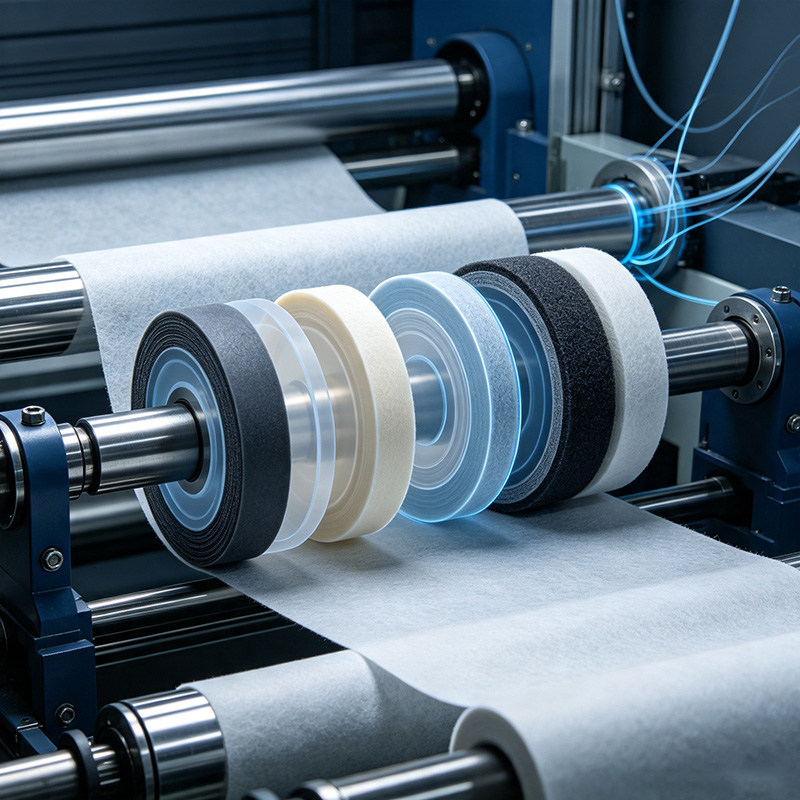
The standard range for transporting electronic components is 40–60 Shore A. Softer shafts (30–35 Shore A) provide better grip on fragile circuit boards, but are subject to rapid wear and deformation (“flattening”) in the contact area. Harder ones (70+ Shore A) can cause microchips on the edges of PCBs (printed circuit boards).
It is important to take into account the effect of “hysteresis”. Cheap rubber does not recover its shape well after compression, which leads to uneven pressure and, as a consequence, local generation of static due to slipping.
2. Thermal stability and coefficient of thermal expansion
Electronics production lines often include heat-setting steps or operate near heating elements. Conventional EPDM or NBR changes its dielectric properties when heated above 80°C. The resistance may drop too much (risk of short circuit) or rise.
The recommended material for 2026 is silicone compounds (VMQ) or special mixtures based on EPDM with thermal stabilizers, maintaining resistance within 10⁶–10⁸ Ohms in the range from -20°C to +120°C.
3. Geometric accuracy and balancing
This is the parameter where savings on production are unacceptable. Shaft runout of more than 0.05 mm causes vibration. Vibration causes microscopic rebounds of material from the shaft surface. Each such rebound is a new act of triboelectric charge generation.
Even a perfectly grounded shaft with a runout of 0.1 mm will generate a static field of up to 5 kV/m in the contact area. For comparison: breakdown of most modern MOSFET transistors occurs at a voltage of 20–100 V.
| Parameter | Standard requirement (General) | Requirement for precision electronics (High-End) | Control method |
|---|---|---|---|
| Surface resistance | 10⁶ – 10⁹ Ohm | 10⁵ – 10⁷ Ohm (stable) | IEC 61340-5-1 |
| Runout | ≤ 0.05 mm | ≤ 0.01 mm | Dial indicator / Laser scanner |
| Hardness (Shore A) | 50 ± 5 | 45 ± 2 (strictly according to technical specifications) | DIN 53505 / ASTM D2240 |
| Roughness (Ra) | 1.6 – 3.2 µm | 0.4 – 0.8 µm (mirror) | Profilometer |
| Layer adhesion | Not standardized | No shear delamination | Pull test |
Purchasing advice:Include in the contract a clause on the provision of a balancing certificate for each shaft with a diameter over 100 mm. The imbalance not only generates static, but also destroys the bearing units of the equipment.
Typical integration mistakes and case study
Even a perfectly manufactured shaft may not cope with the task if the grounding system is not designed correctly. The antistatic shaft must have electrical contact with the grounded axis (spindle). Manufacturers often use steel axles coated with a layer of oxide or paint, or install the shaft on insulating bushings.
Case: “Phantom” defects on a sensor assembly line
In our practice, a case was recorded at one of our partner enterprises involved in the assembly of automotive electronics. The line produced 4.5% defective due to the “floating” potential on the board. Engineers replaced standard polyurethane shafts with expensive antistatic silicone shafts, ordering them from a trusted manufacturer.
The problem has not gone away. The audit showed that the shafts were grounded through rolling bearings, the lubricant of which had a high dielectric resistance. The grounding circuit has been broken.
Solution:The Changzhou Sykeda Mechanics plant proposed a modification to the axle design. We have introduced copper-graphite composite current collection brushes that directly connect the metal core of the shaft to the machine frame. In addition, during the production of the shafts themselves, we ensured that the rubber compound has direct contact with the metal sleeve through a special adhesive sublayer that conducts current. After modernization, the defect rate dropped to 0.02%.
This example demonstrates that shaft selection is a system task. The supplier must have competence not only in rubber chemistry, but also in the mechanics of interfaces. That is why cooperation with full-cycle factories such asChangzhou Sykeda Mechanics, avoids fragmentation of responsibility. Our engineers analyze the customer’s mounting locations at the drawing stage, offering integrated shaft-axis-grounding solutions.
Criteria for assessing supplier reliability (E-A-T-U factors)
In the context of sanctions restrictions and logistics turbulence in 2025-2026, choosing a partner from China requires careful verification. The market is flooded with intermediaries posing as factories. How to distinguish a real manufacturer of high-precision shafts?
1. Availability of a metrological base
Request video or photo reports with measuring stands. A real factory, such as Changzhou Sykeda Mechanics, has a fleet of CNC machines and laser systems that can achieve processing accuracy of up to 0.01 mm. The lack of our own machine park means that the order is placed externally, which eliminates quality control at each stage.
2. Certification and standards
Check for a valid ISO 9001 certificate. For deliveries to Russia and the EAEU countries, compliance with the technical regulations of TR CU 010/2011 “On the safety of machinery and equipment” is critically important. The products of our plant undergo strict incoming control of raw materials and a final check of geometric parameters, which is confirmed by quality certificates for each batch.
3. Possibility of customization (OEM/ODM)
Standard shafts are rarely suitable for unique conveyor lines. The ability of the plant to produce a shaft according to your drawing, including complex profiles (split shafts, shafts with grooves for belts), indicates a high level of engineering culture. We implement the full cycle: from optimization of the client’s design documentation to the production of prototypes and serial production. This allows you to adapt the solution to specific tasks, be it the production of medical products or environmental filters.
4. Transparency of the production cycle
A reliable partner provides compound datasheets and internal test results. Changzhou Sikeda Mechanics' technical competence level reaches 99% and customer satisfaction reaches 98%, thanks to its transparent service policy. Each batch is accompanied by detailed technical documentation, which simplifies the acceptance and commissioning procedure.
Logistics and economics of ownership in 2026
When calculating your cost of ownership (TCO), don't just look at the unit price. A cheap shaft that fails after 3 months due to rubber delamination or loss of antistatic properties will cost more than line downtime. The cost per hour of downtime for a modern SMT pipeline can be in the thousands of dollars.
Direct deliveries from the manufacturer from the industrial cluster of the Yangtze River Delta allow us to optimize logistics. The plant's location in Changzhou provides convenient access to the major transportation hubs of Shanghai and Ningbo. We take care of packaging issues that prevent shaft deformation during transportation and preparation of export documentation.
The timing of orders is agreed upon individually. For standard items, it is possible to maintain safety stock in the warehouse, which reduces the delivery time to 3-5 weeks on a turnkey basis, taking into account customs clearance. For individual projects, the timing depends on the complexity of the molds, but thanks to our own tool shop, we are able to reduce the pre-production stage to a minimum.
Checklist for an engineer before ordering
Before sending a request to the supplier, check the following points:
- Load type:Only clamping force or also pulling force? (Influences the choice of rubber-metal bond strength).
- Wednesday:Presence of oils, ozone, UV radiation? (Requires selection of a specific type of rubber: NBR, EPDM, Silicone).
- Grounding:How will the shaft contact the “ground”? Are there current collectors?
- Geometry:Is the work surface required to be sanded? (For electronics, grinding Ra ≤ 0.8 is recommended).
- Certification:Are additional outgassing tests required for cleanrooms?
A properly selected antistatic roller is not just a consumable material, but an element of a product quality assurance system. In 2026, technology requires an approach based on data and precise specifications, rather than empirical choices.
The Changzhou Sikeda Mechanics plant is ready to act as your technology partner in solving problems in the transportation and processing of materials in the electronics industry. We combine engineering expertise, state-of-the-art manufacturing facilities and a rigorous approach to quality to ensure the reliability of your production lines.
Ready to streamline your process?
Request a commercial offer and technical data sheet for the positions you are interested in. Our engineers will carry out a free audit of your current specification and propose a solution that meets 2026 standards.