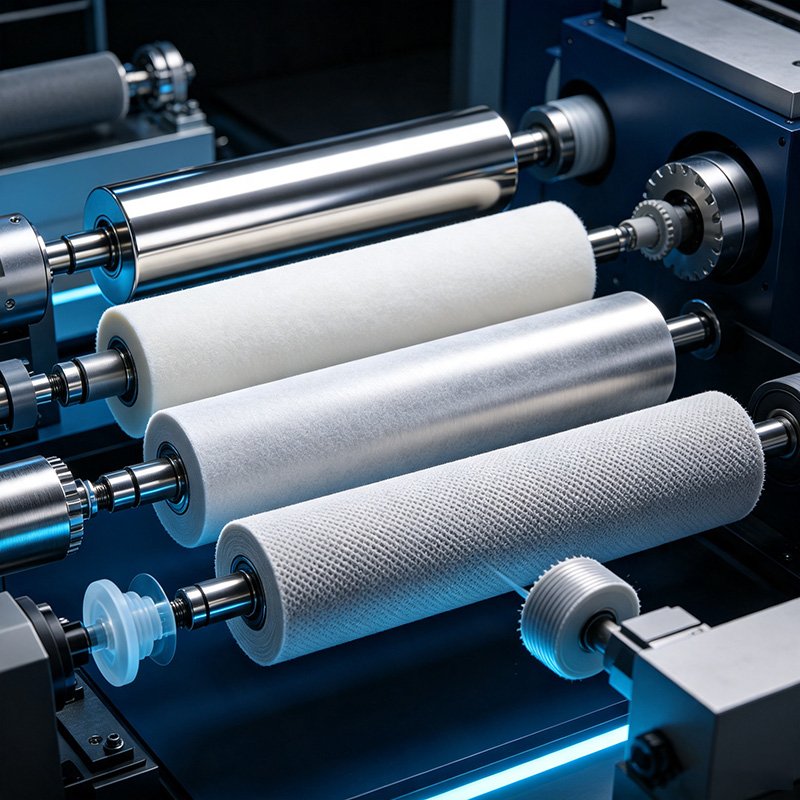

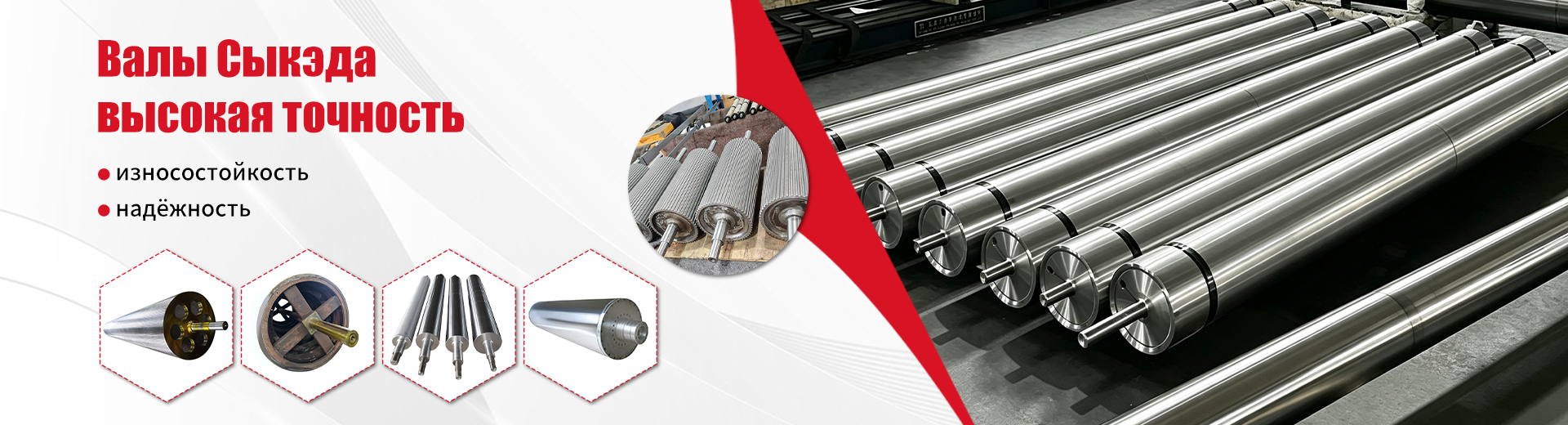
Mirror shaft polished to a mirror shine: price from the factory
2026-09-16
- Technical requirements for a mirror surface: why Ra 0.2 is not the limit
- Materials Science and Design Features: Steel, Coatings and Heat Treatment
- Typical purchasing mistakes and risks of poor-quality balancing
- Logistics, customs and total cost of ownership (TCO) calculations
- Industry specifics: rollers for nonwovens and medicine
- How to place the right order: step-by-step algorithm
Technical requirements for a mirror surface: why Ra 0.2 is not the limit
The main thing in 30 seconds:
- Roughness criticality:For production lines of nonwoven materials (spunbond, meltblown), the shaft surface roughness parameter should be no more than Ra 0.2–0.4 µm. Any deviation leads to polymer sticking and fabric rejection.
- Direct deliveries without intermediaries:Orderingmirror shaft polished to a mirror shine: price from the factorydirectly from the manufacturer from China (Changzhou), you save up to 35% of the budget compared to purchasing through European distributors, while maintaining processing accuracy of up to 0.01 mm.
- Integrated engineering:A modern shaft is not just a cylinder. These are balancing, thermal channels and coating. The Changzhou Sykeda Mechanics plant provides a full cycle: from drawing to dynamic balancing and ISO 9001 certification.
In precision engineering, the concept of “mirror shine” is often perceived subjectively. However, for a process engineer or the head of a purchasing department, this is a strict metrological value. In the context of the production of polymer films, papers and nonwovens, the quality of the roll surface determines not only the aesthetics of the final product, but also the stability of the entire technological process.
When we talk about buyingmirror shaft polished to a mirror shine: price from the factory, we mean a product that has undergone multi-stage mechanical and abrasive processing. Standard grinding provides Ra parameters of 0.8–1.6 µm, which is absolutely insufficient for modern high-speed lines (blade speed over 300 m/min). This requires superfinishing or honing to achieve an Ra of 0.1–0.2 µm.
Why is this important? When molten polypropylene or polyethylene comes into contact with metal microroughness, an adhesion effect occurs. The polymer flows into microcracks, cools and accumulates. This leads to tearing of the web, the appearance of “holes” and the need to frequently stop the line for cleaning. The use of shafts with a true mirror surface minimizes the coefficient of friction and eliminates sticking.
Engineering advice:When requesting a quote, always specify the roughness control method. Require the provision of a protocol of measurements with a profilometer, and not a visual assessment “by eye”. The presence of a certificate for each shaft is a sign of mature production.
Materials Science and Design Features: Steel, Coatings and Heat Treatment
The durability of the shaft depends not only on the quality of polishing, but also on the base material. In our practice, there have been cases when customers chose shafts made of ordinary structural steel with chrome plating, focusing on low price. The result was delamination of chromium after 3-4 months of operation under thermal cycles.
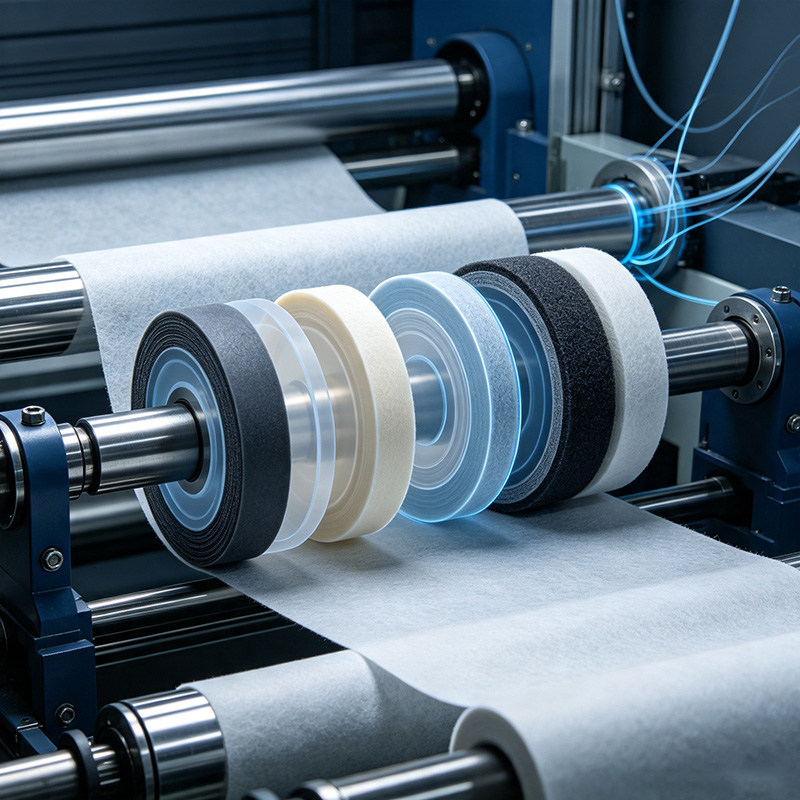
FactoryChangzhou Sykeda Mechanics, located in the industrial cluster of the Yangtze River Delta, uses high-alloy steels such as 45# (similar to 45 steel), 40Cr (chromium steel) and 304/316L stainless steels for aggressive environments to produce mirror shafts. The key step is heat treatment (quenching and tempering), which provides a surface hardness of HRC 55–62. This prevents the formation of dents and scratches during installation and operation.
Comparison of shaft materials
| Material/Coating | Hardness (HRC) | Corrosion resistance | Application | Cost |
|---|---|---|---|---|
| Steel 45# + Chrome | 45-50 | Low (risk of pitting) | General mechanisms, low loads | Low |
| Steel 40Cr (Hardened) | 55-60 | Average | Highly loaded units, press shafts | Average |
| 316L stainless steel | 25-30 (without hardening) | High | Food industry, medicine, chemistry | High |
| Ceramic coated steel | > 65 | Absolute | Extreme temperatures, abrasive environments | Premium |
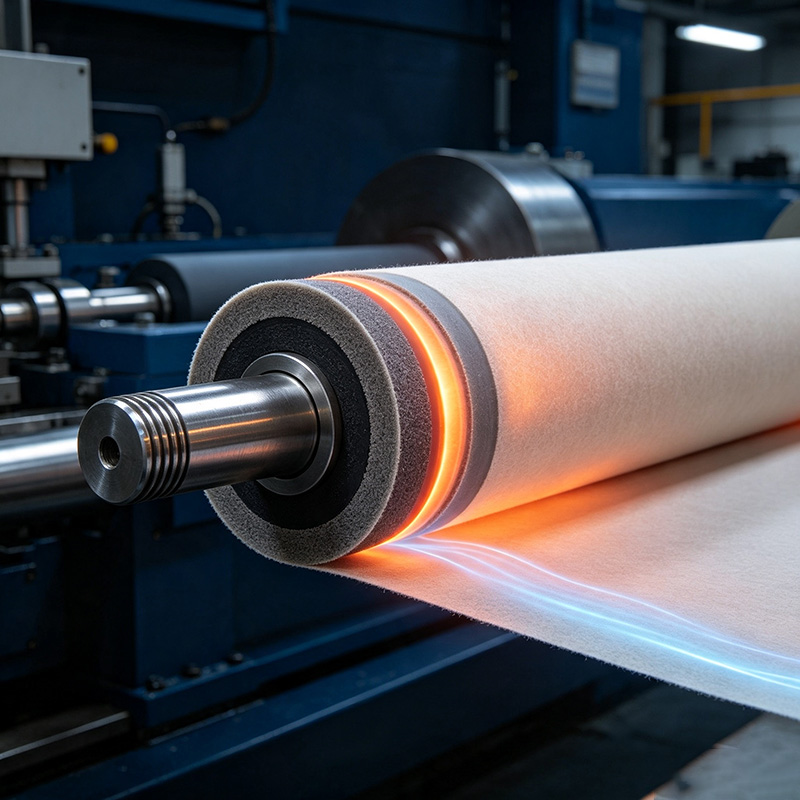
Particular attention should be paid to internal cooling or heating channels. In the production of nonwoven materials (spunbond), rolls are often thermally pressed. Uniformity of temperature distribution along the entire length of the shaft (up to 3-4 meters) is critical. Uneven heating causes thermal deflection (“banana”), which disrupts the contact geometry and material thickness.
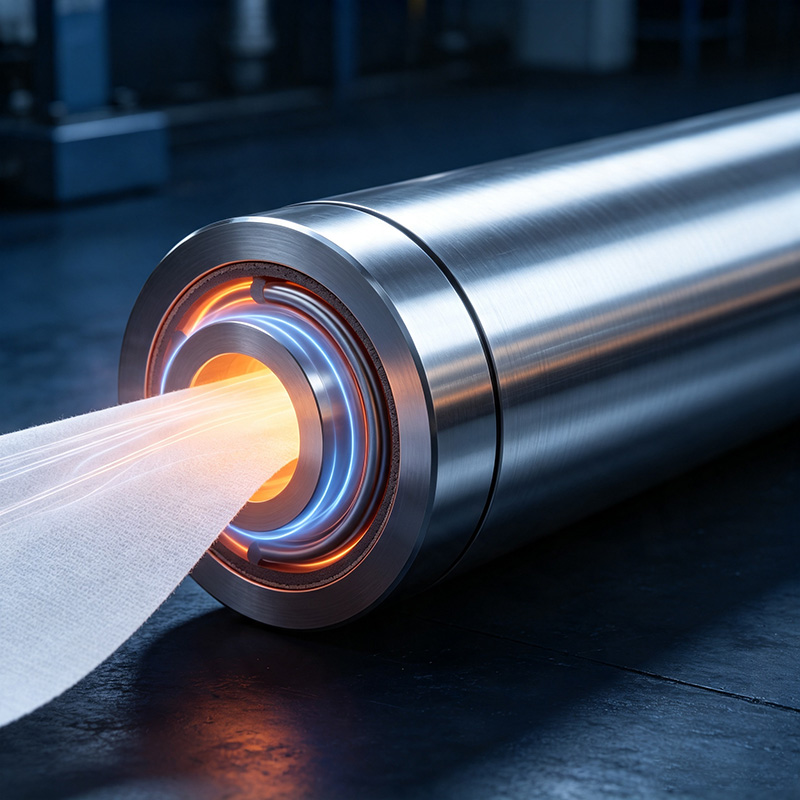
EngineersChangzhou Sykeda Mechanicscomputer modeling of heat flows is used when designing internal channels. This makes it possible to achieve a temperature difference of no more than ±1°C over the entire working surface. This approach eliminates local overheating and deformation, ensuring stable product quality even when the line operates around the clock.
Typical purchasing mistakes and risks of poor-quality balancing
One of the most hidden problems facing equipment manufacturers is vibration. Even a perfectly polished shaft can become a source of defects if it is not balanced. The vibration is transmitted to the bearing units, causing them to wear out prematurely, and creates waviness in the produced material.
We analyzed a case at one of the enterprises in Eastern Europe, where the line for the production of filter materials constantly produced defects with periodic thickness. The reason lay not in the extruder, but in the imbalance of the guide shaft. A cheap analog purchased on a third-party market had a residual imbalance that exceeded the permissible standards by 4 times. Replacing the shaft with a product manufactured at the Changzhou plant with mandatory dynamic balancing solved the problem in one day.
Quality control process at the manufacturing plant
To avoid such situations, the manufacturing process should include the following steps:
- Incoming inspection of workpieces:Ultrasonic flaw detection to detect internal cavities and cracks in metal.
- Rough and finishing turning:Maintaining the alignment of the shaft journals relative to the working part with an accuracy of 0.01 mm.
- Heat treatment:Hardness control along the entire length of the product.
- Sanding and polishing:Consistent use of abrasives of different grain sizes to achieve a mirror finish.
- Dynamic balancing:It is held at specialized stands. The balancing class must correspond to G2.5 or G1.6 according to the ISO 1940 standard.
FactoryChangzhou Sykeda Mechanicshas its own fleet of CNC machines and laser equipment, which allows you to control the geometry at every stage. Having a dynamic stand right on the shop floor means that the customer receives a ready-to-install product that does not require additional adjustments on site. This reduces equipment downtime when replacing components.
Important:When ordering, be sure to indicate the balancing class. For high-speed lines (more than 200 m/min), class G1.6 is recommended. For slow lines G2.5 is allowed. Savings on balancing always result in costly repairs of bearing units.
Logistics, customs and total cost of ownership (TCO) calculations
Many Russian and foreign buyers are wary of direct deliveries from China due to difficulties with logistics and customs. However, when it comes to components such asmirror shaft polished to a mirror shine: price from the factorybecomes a decisive factor in profitability. Intermediates in Europe or local dealer networks add 30-50% to the cost without adding technical value.
Direct cooperation with the factory in Changzhou allows us to optimize costs. The company undertakes the preparation of a full package of export documentation, including packaging suitable for sea transportation (wooden boxes with anti-corrosion protection). The products are certified according to the ISO 9001 system, which simplifies the incoming control procedures on the buyer's side.
Price formation factors
- Dimensions and weight:The shaft length and diameter determine the logistics cost. The plant optimizes packaging to maximize container loading.
- Difficulty of processing:The presence of internal channels, through holes or special coatings increases labor intensity.
- Execution accuracy:Tolerances less than 0.01 mm require the use of precision machines and more setup time.
- Batch size:Batch production reduces unit costs due to economies of scale.
The production time for standard shafts is 15-20 working days. For individual projects that require the development of drawings and production of frames, the period may increase to 30-35 days. The company practices transparent pricing: you pay for material, machine hours and logistics, without hidden extra charges.
In addition, the plant offers the production of not only the shafts themselves, but also professional frames for them. This solution provides end-to-end integration of components. By purchasing the shaft and frame from one place, you guarantee perfect compatibility of the units, which is critical for maintaining the geometry of the production line.
Industry specifics: rollers for nonwovens and medicine
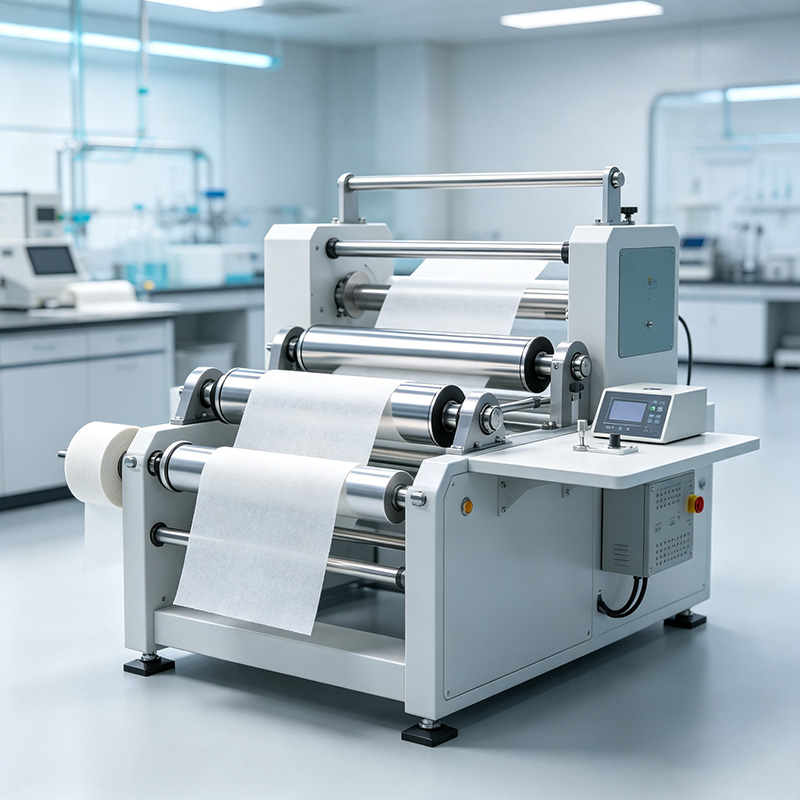
Factory main focusChangzhou Sykeda Mechanics- equipment for the production of nonwoven materials. This industry places extreme demands on surface cleanliness. Medical products, environmental filters, automotive interiors - all of these products are manufactured using rollers that must be completely inert and smooth.
For example, in the production of spunbond for medical masks (meltblown material), electret charging of fibers is used. Any contamination of the shaft or its unevenness can disrupt the fiber structure and reduce the filtering ability of the material. Mirror stainless steel shafts, treated to Ra 0.2, provide the necessary hygiene and ease of cleaning.
The plant's product range also includes split shafts and guide rollers. Split designs make it easy to remove the web without cutting it, which significantly speeds up line changeover. Individual production of such units requires highly qualified engineers, since it is necessary to ensure the rigidity of the structure despite the presence of a cut.
The company's experience in serving international markets allows us to adapt products to local standards. Whether the requirements are GOST, European CE or American ASTM, the plant is ready to provide the necessary technical data sheets and test reports.
How to place the right order: step-by-step algorithm
In order to get exactly the product that will solve your production problems, follow this algorithm when contacting the factory:
- Preparation of technical specifications:Determine operating parameters: rotation speed, temperature, type of material being processed, blade tension.
- Choice of material and coating:Consult with plant engineers. For aggressive environments, choose stainless steel; for high loads, choose hardened chromium steel.
- Geometry refinement:Please provide drawings or samples. If there are no drawings, the plant’s specialists will help develop them based on your sketches and equipment requirements.
- Tolerance approval:Clearly specify alignment, runout and roughness requirements. Fix these parameters in the contract.
- Logistics and packaging:Discuss delivery terms (EXW, FOB, CIF). Make sure that the shafts will be packed in wooden boxes with fixation to prevent rolling.
Remember thatmirror shaft polished to a mirror shine: price from the factoryis an investment in the continuity of your production. Cheap analogues often lead to hidden losses due to downtime and defects. By choosing a partner with proven expertise such asChangzhou Sykeda Mechanics, you get reliability, time-tested and international standards.
We don't just sell metal cylinders. We offer engineering solutions that improve the efficiency of your business. Our technical competence reaches 99% and our customer satisfaction rate reaches 98%. These numbers speak louder than any advertising slogan.
Ready to upgrade your production line? Don't put off resolving quality issues until later. Contact us to receive detailed advice and calculate the cost of your project.